
Astronomy -- A little stargazing
Astronomy has to do with stars. But there are other things to see in the sky: the sun and the moon. These are of primary interest here.
So let's start with a little stargazing.
Simple Stone Age astronomy.
We sit in front of our teepee in the evening sun, gnawing on a mammoth bone and watching the sunset, particularly beautiful today. But what the woolly mammoth is that? A few days ago, the sun set to the left of this boulder, but today it sets to the right of it. This needs to be investigated further.
Sonnenuntergang im Jahreslauf
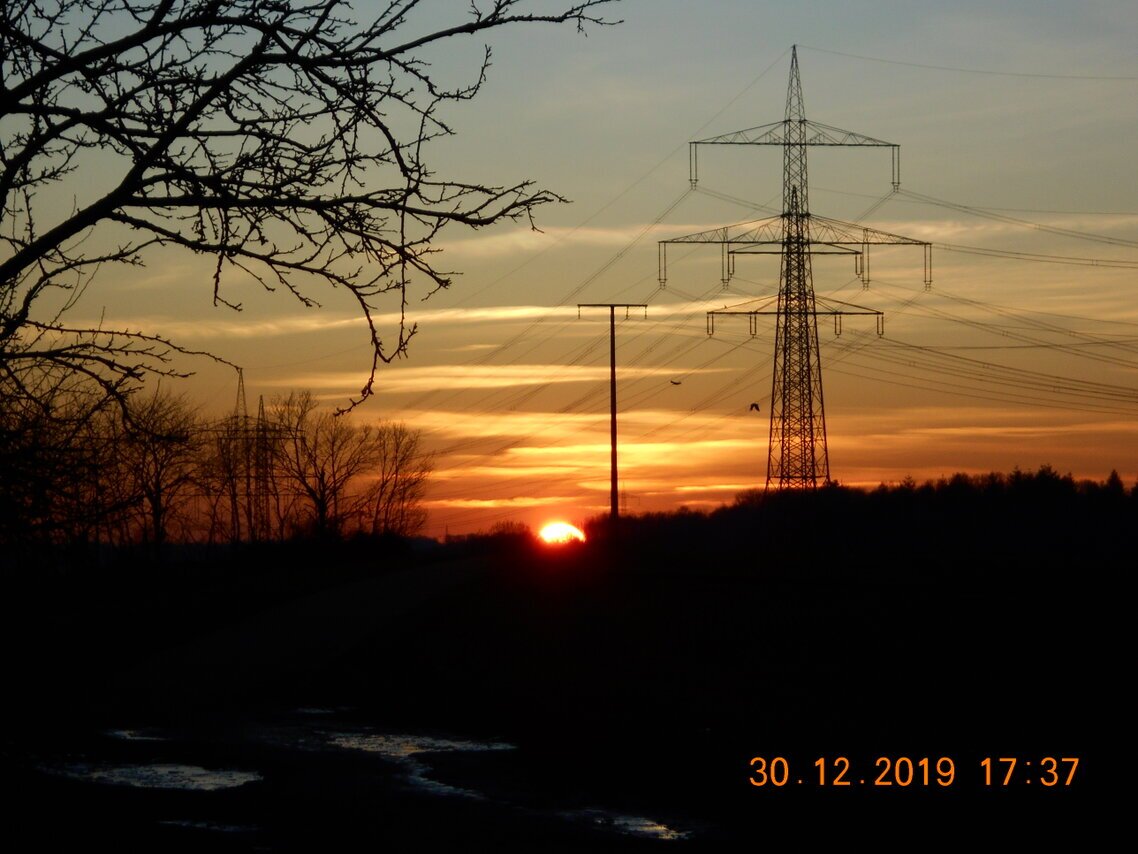
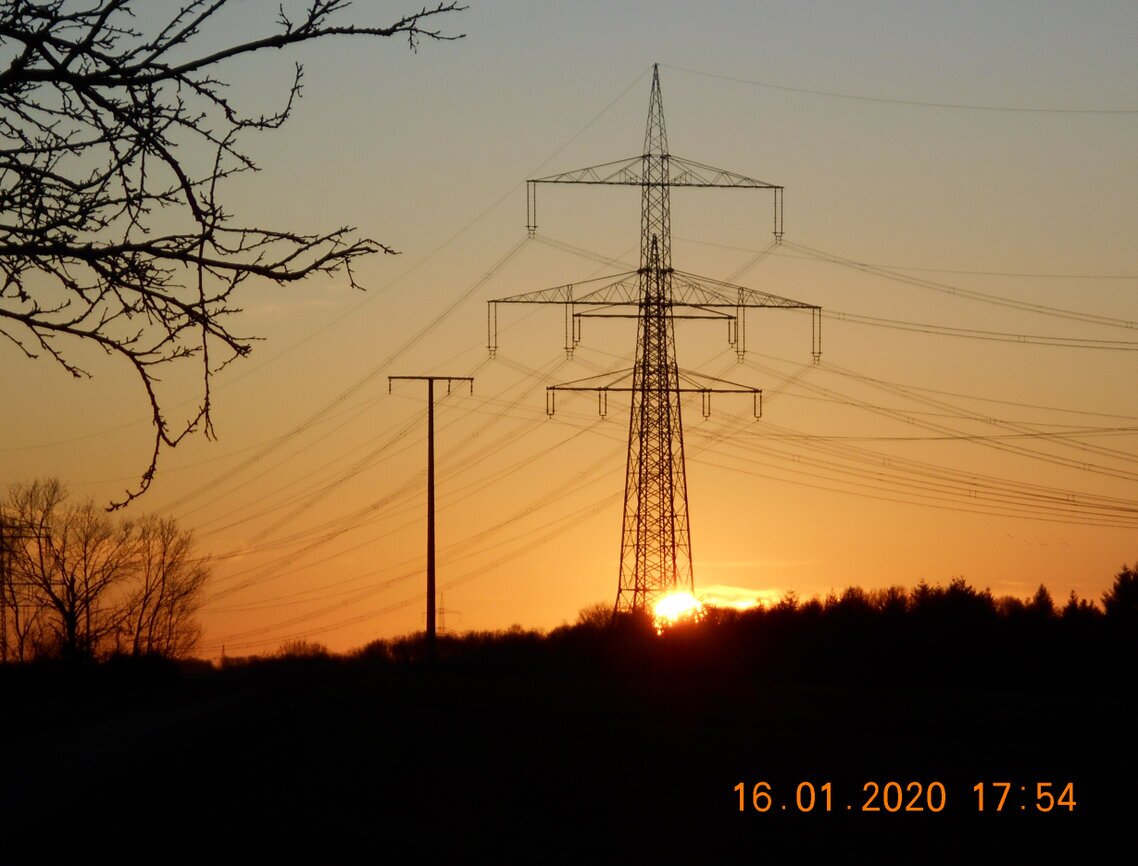
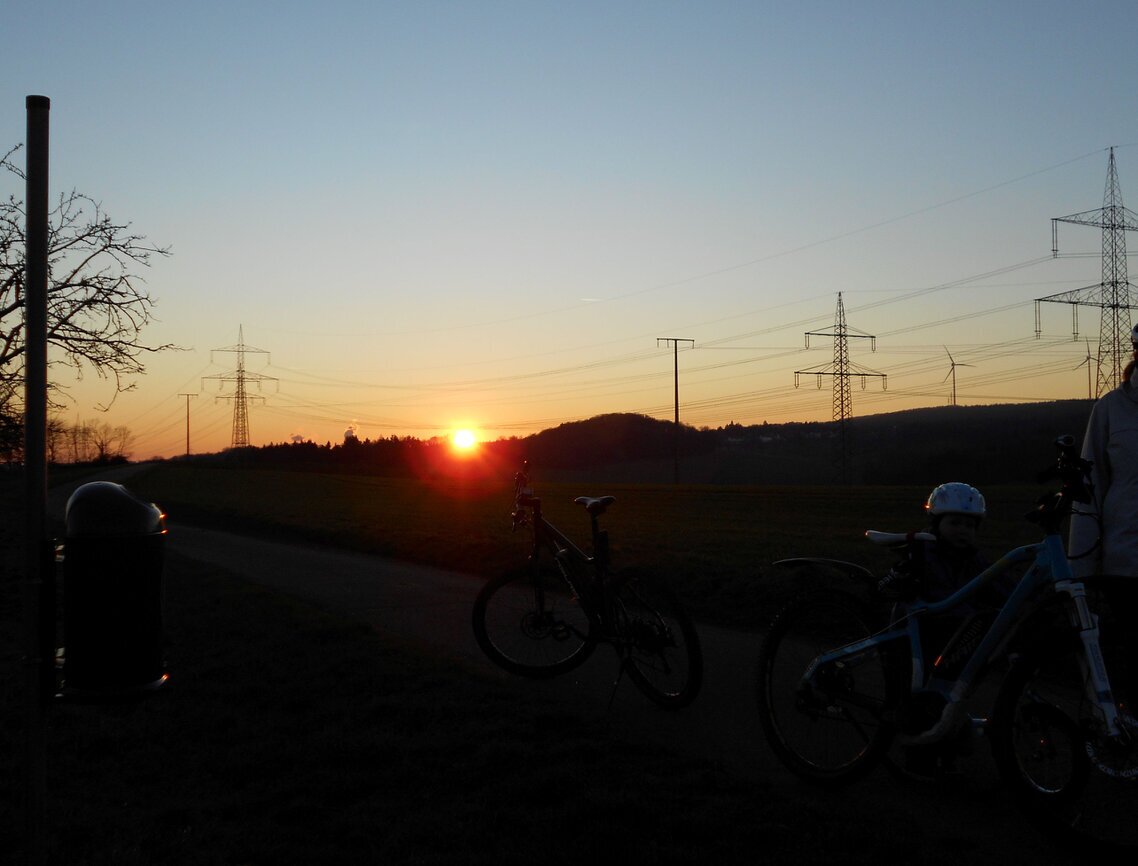
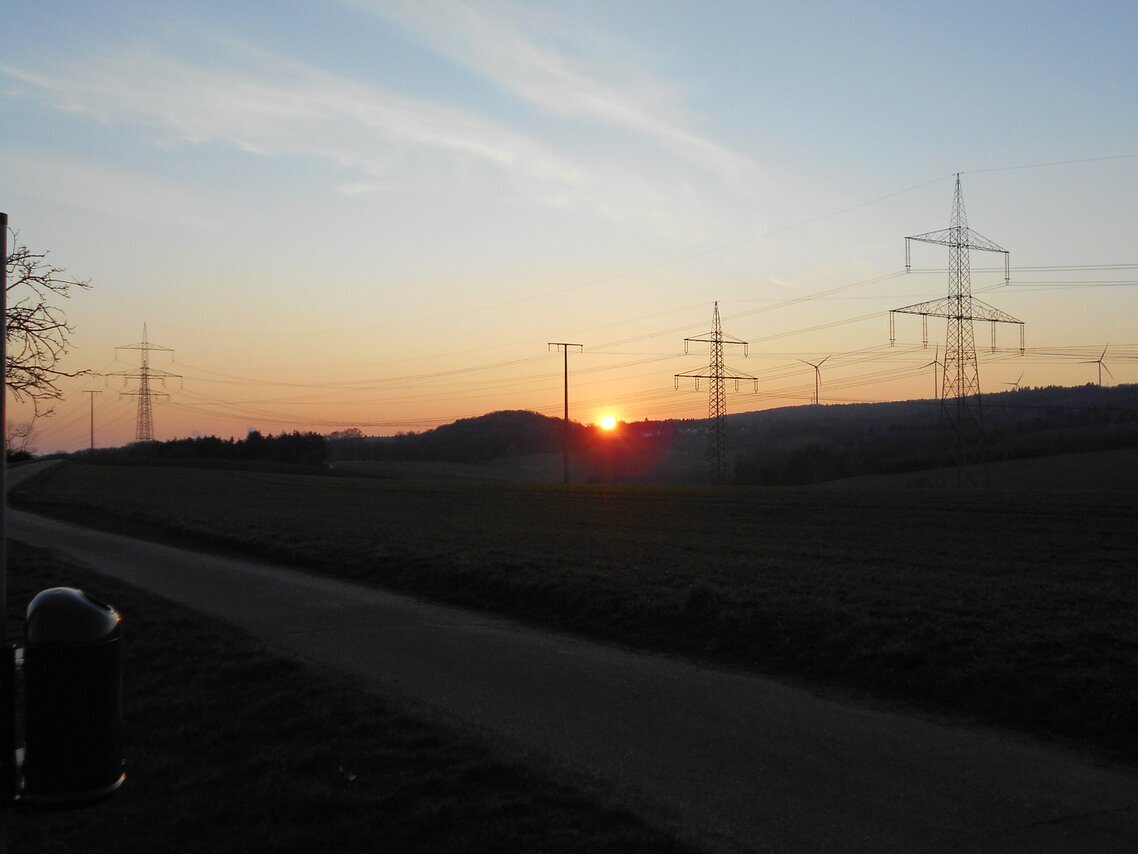
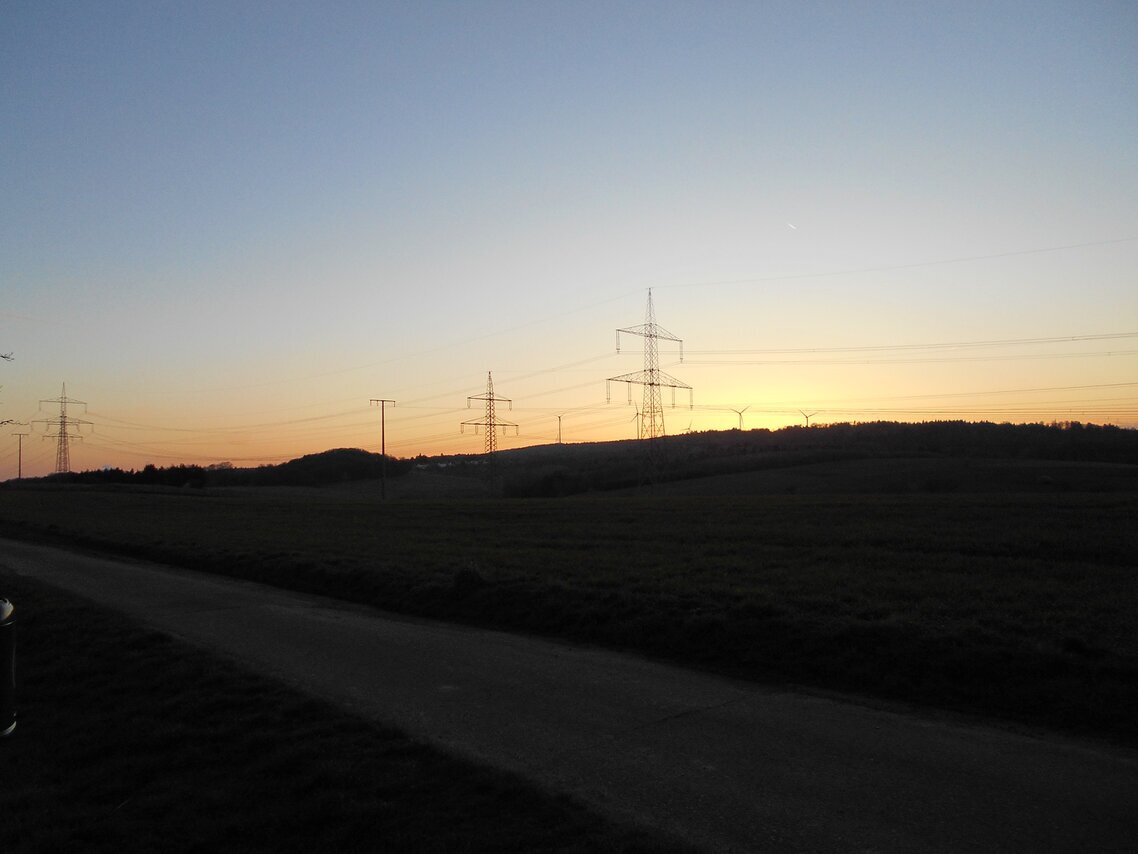
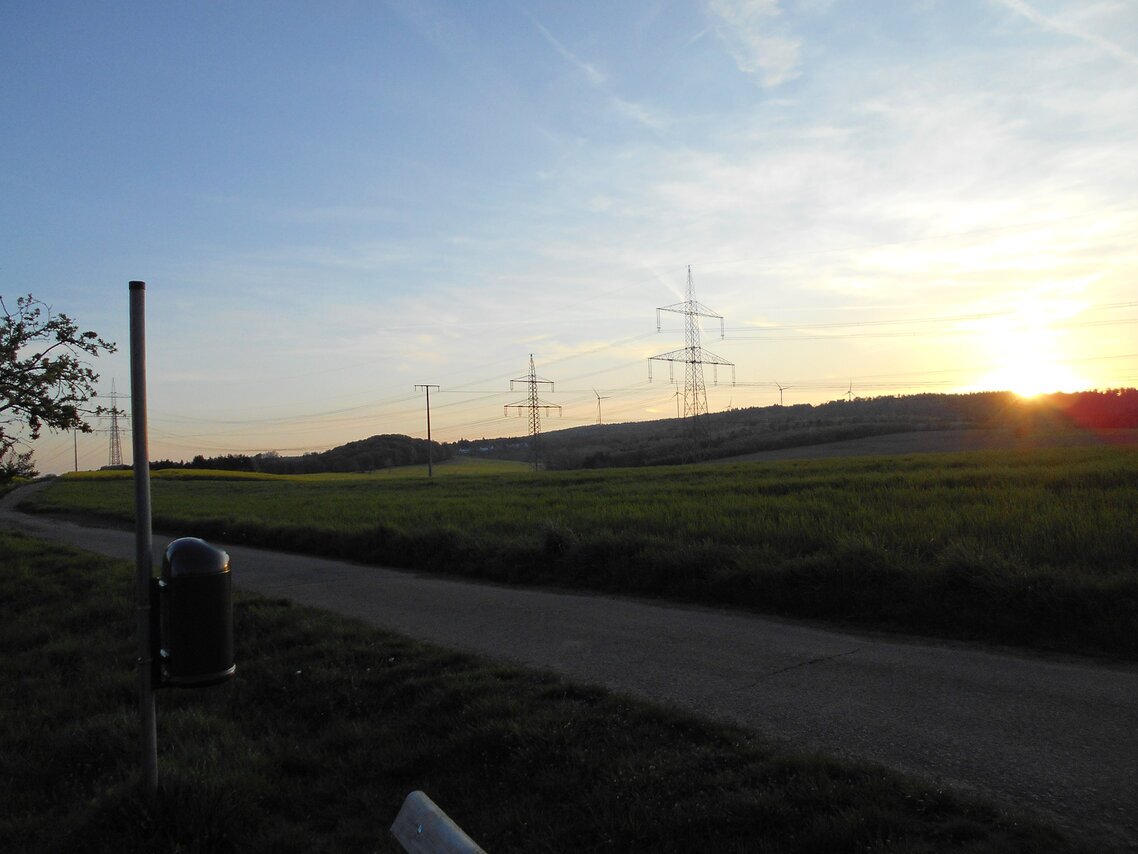
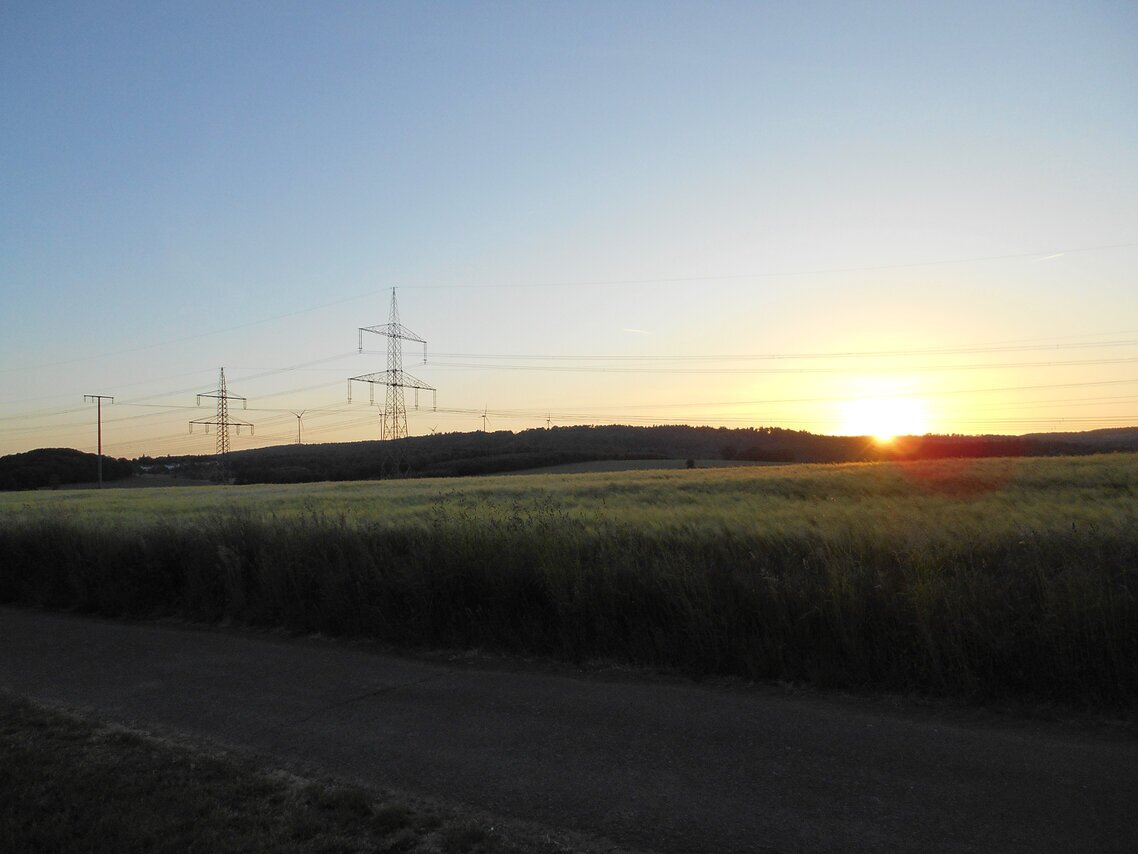
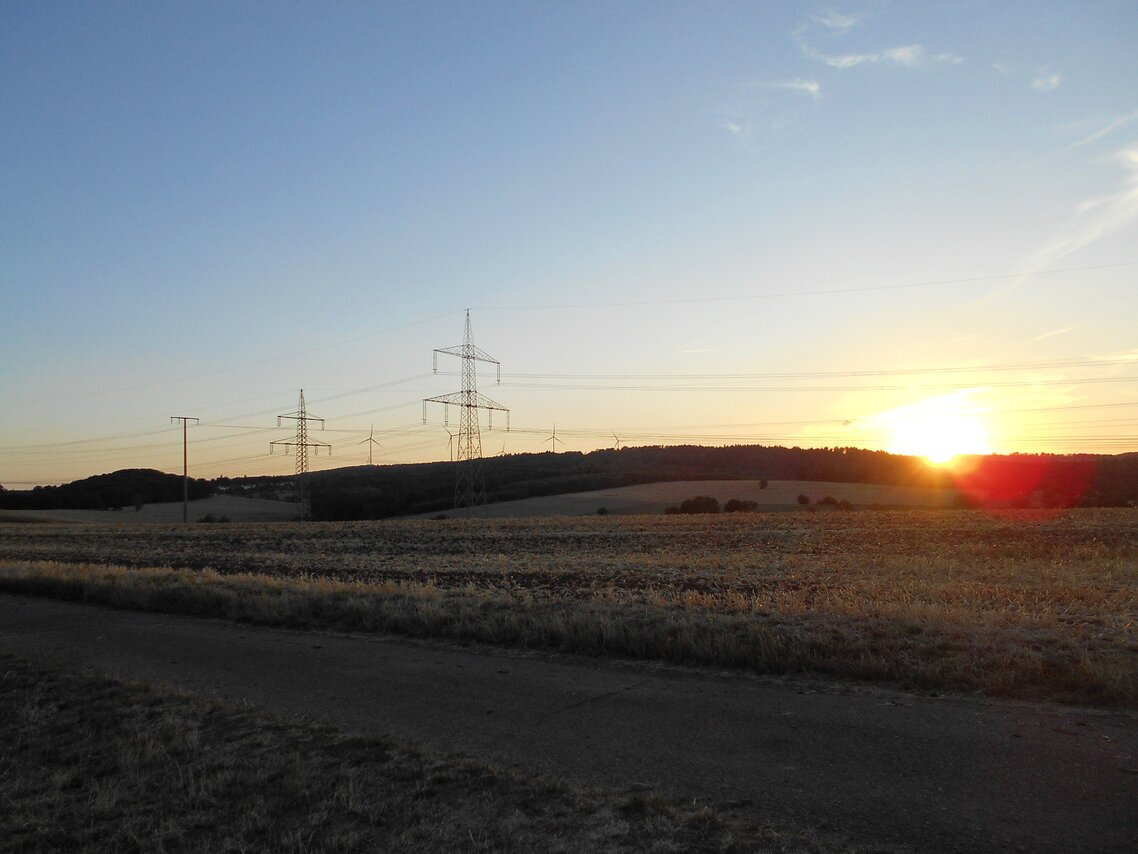
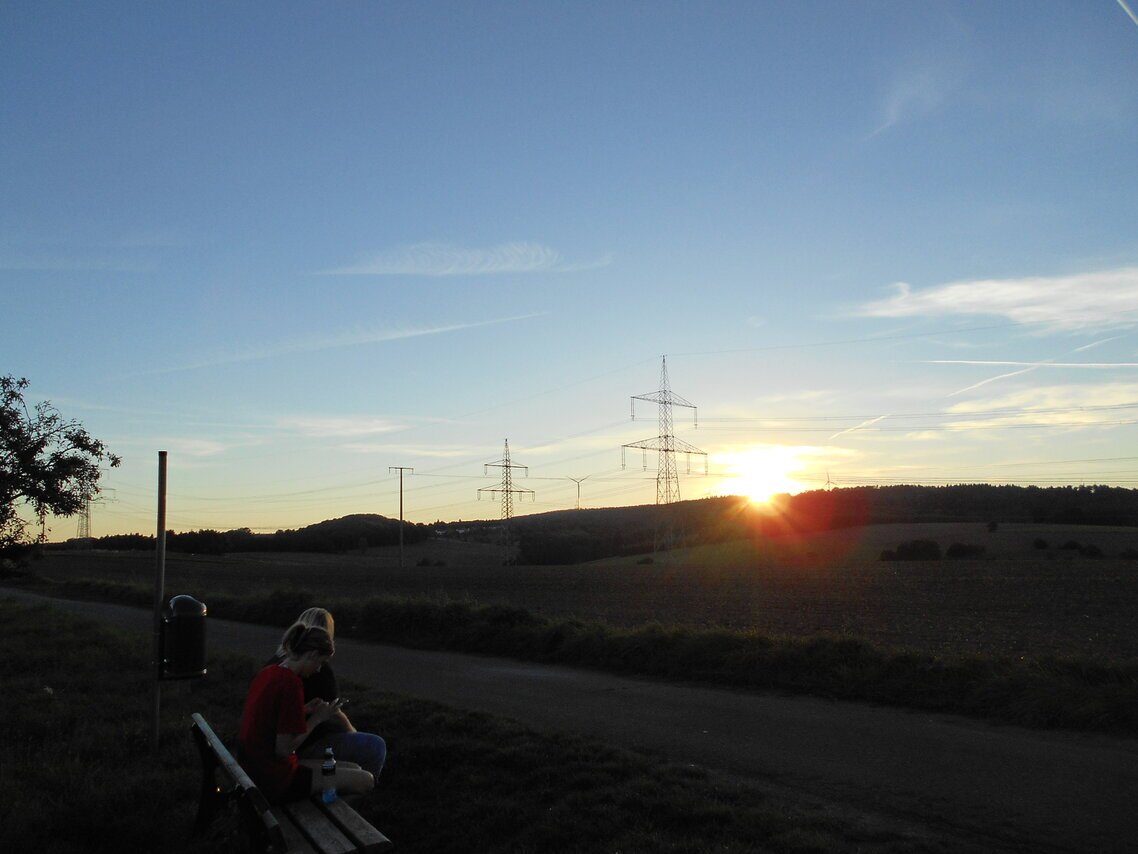
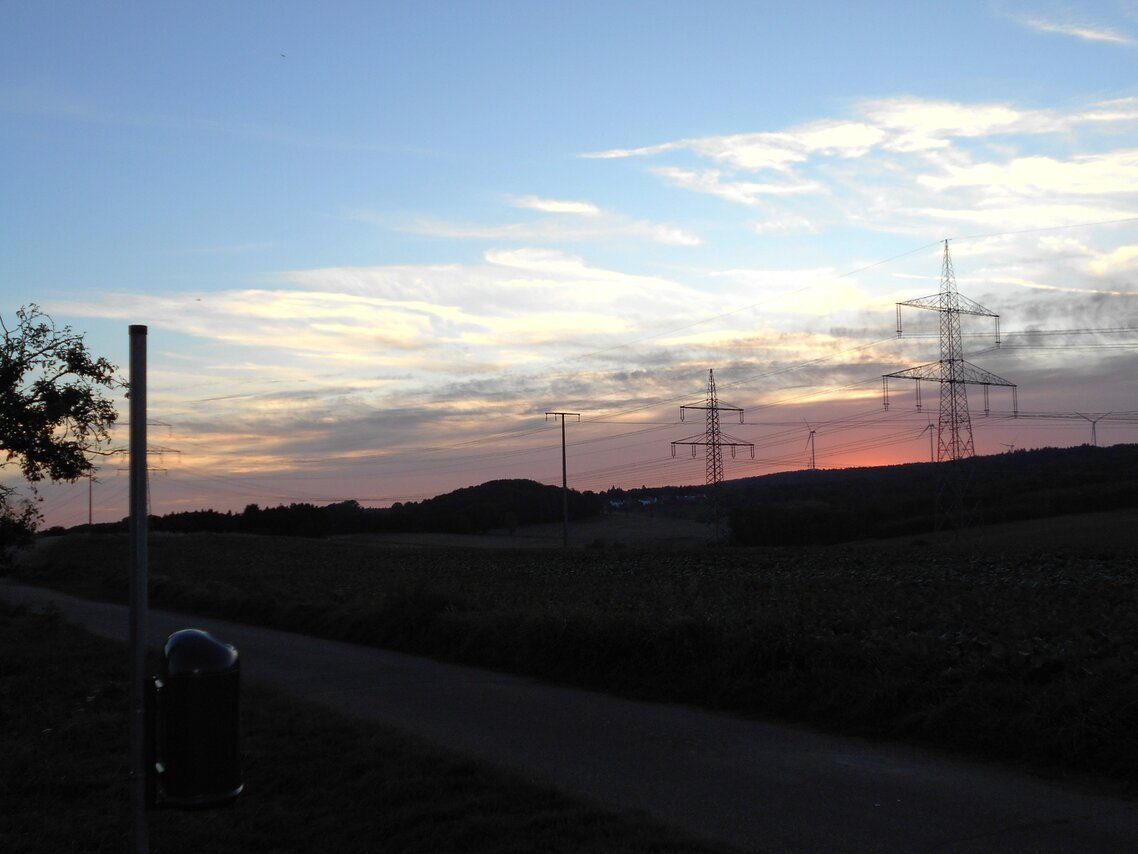
The result of our observations: the sun actually changes the location of its setting over the course of the year. (If you can't see it, move the mouse pointer away from the image.) This change is fairly regular, and after a year it starts all over again.
Let's look at this schematically and for sunrise and sunset at the same time:
The points where the sun touches the horizon move from a more northerly point towards the south, then reverse and move back north. The northern extremes are reached in summer and are called the summer solstice. The southern turning points are correspondingly the winter solstice points.
At the solstices, the sunrises and sunsets remain in the same place for a few days before resuming their journey, now in the opposite direction. In English-speaking countries in particular, the beautiful term "standstill of the sun" is also used for this.
The solstice points can be connected by the diametric lines drawn in red. This results in the so-called sun diagram or solstice diagram X.
Now let us look at the eastern horizon (=sunrise) once again from our earthly observation point, but with a slight change: if you have already read the page about animals, you will know that Ice Age people symbolised the sun as a horse.
The sun horse travels from the winter solstice point in the southeast to the summer solstice in the northeast, then turns around and trots back south. Twice a year, the sun horse changes its direction of movement. These turning points were important to the cave painters, especially the winter solstice, and they depicted this moment in their paintings.
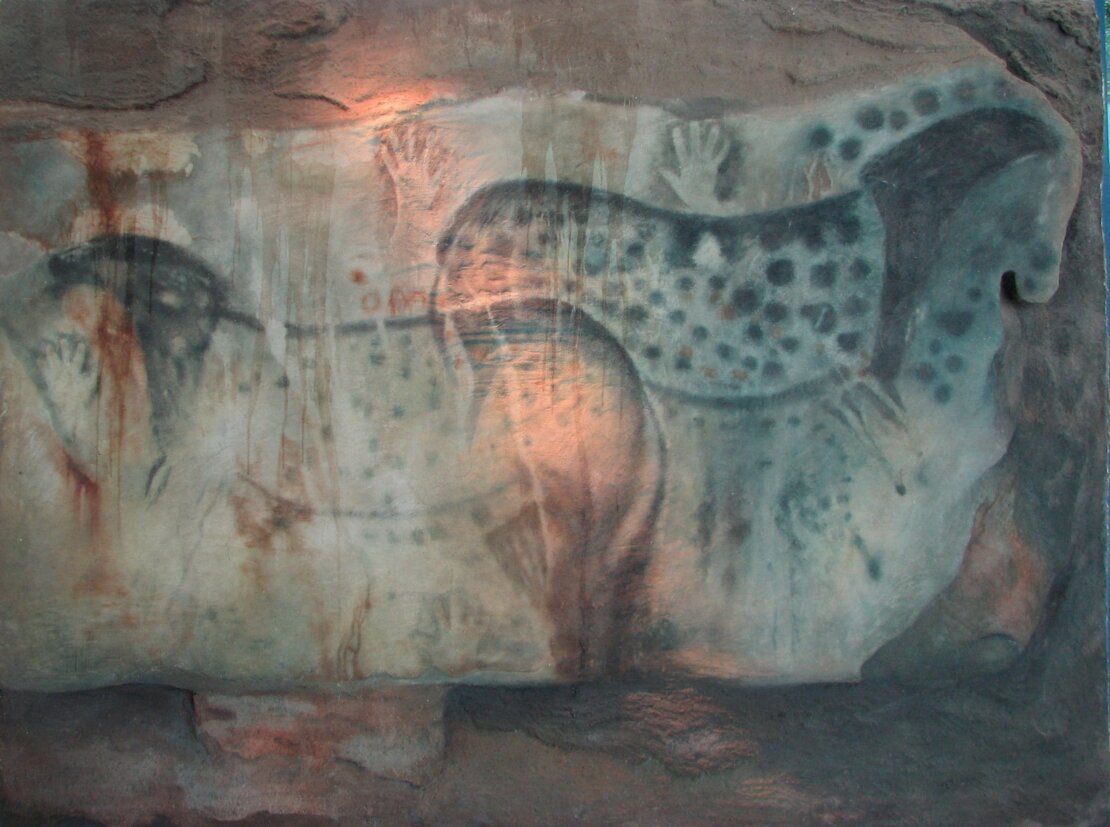
The solstice horses in the Pech-Merle cave (replica in the Anthropos Museum in Brno)
Photo: © Kerstin Nebelsiek /Wikimedia Commons, Creative Commons - CC BY 4.0
The solstice horses from the Chauvet Cave near Vallons Pont D'Arc / France
Drawing: Yannik LeGuillou
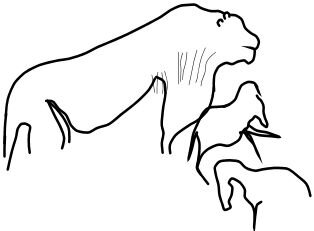
The twin horses in the Font-de-Gaume cave near Les Eyzies
Drawing: Abbé Breuil
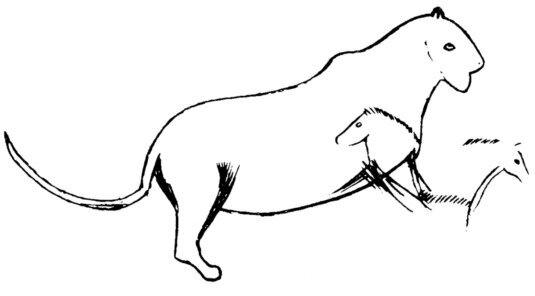
All these solstice images can be found at the far end of the cave, at the turning point for human visitors. Appropriately, the Ice Age painters also had the sun turn around there.
As for the lioness, who often appears together with the two solstice horses, I have explained her role in more detail on the page about animals. She is the mother of the twin horses, born at the winter solstice.
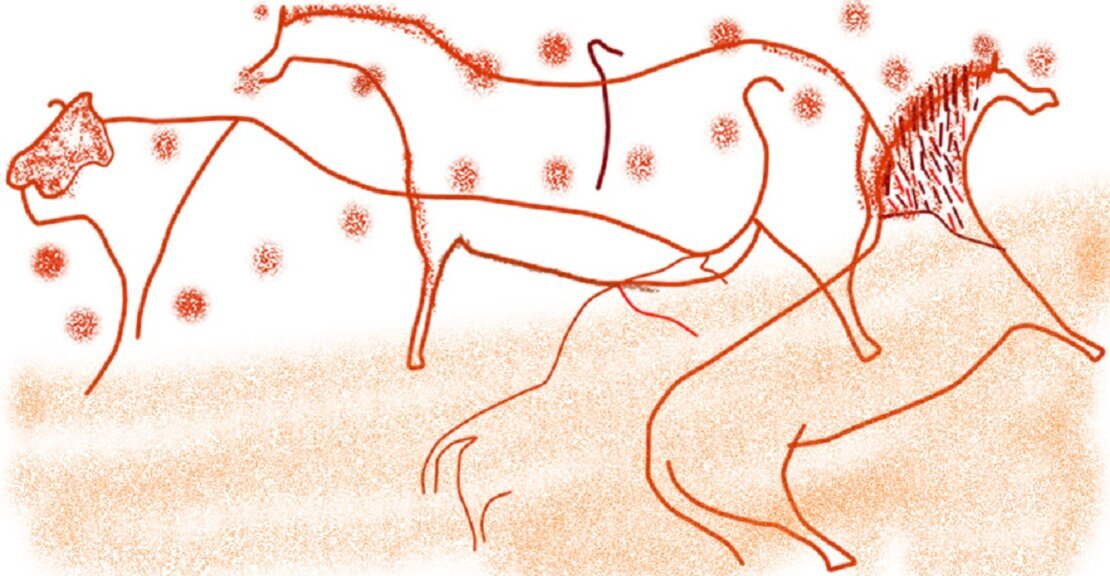
Once again, the two horses of the winter solstice with their lioness mother.
Drawing in a side passage of the Pech-Merle / Le Combel cave in Cabreret.
Drawing by Harald Ulrich after Abbé Lemozi